Research · Fabricated PCB prototype / grant-stage research
AeroHive Sentinel — Air Bio-Load
An airborne biological-load sensing platform developed through PCB design, prototype fabrication, and an NIH R03 research pathway.
Problem
Airborne biological risk is difficult to monitor continuously with a compact field device, especially when laboratory infrastructure and reliable connectivity are unavailable.
Description
What I built or investigated
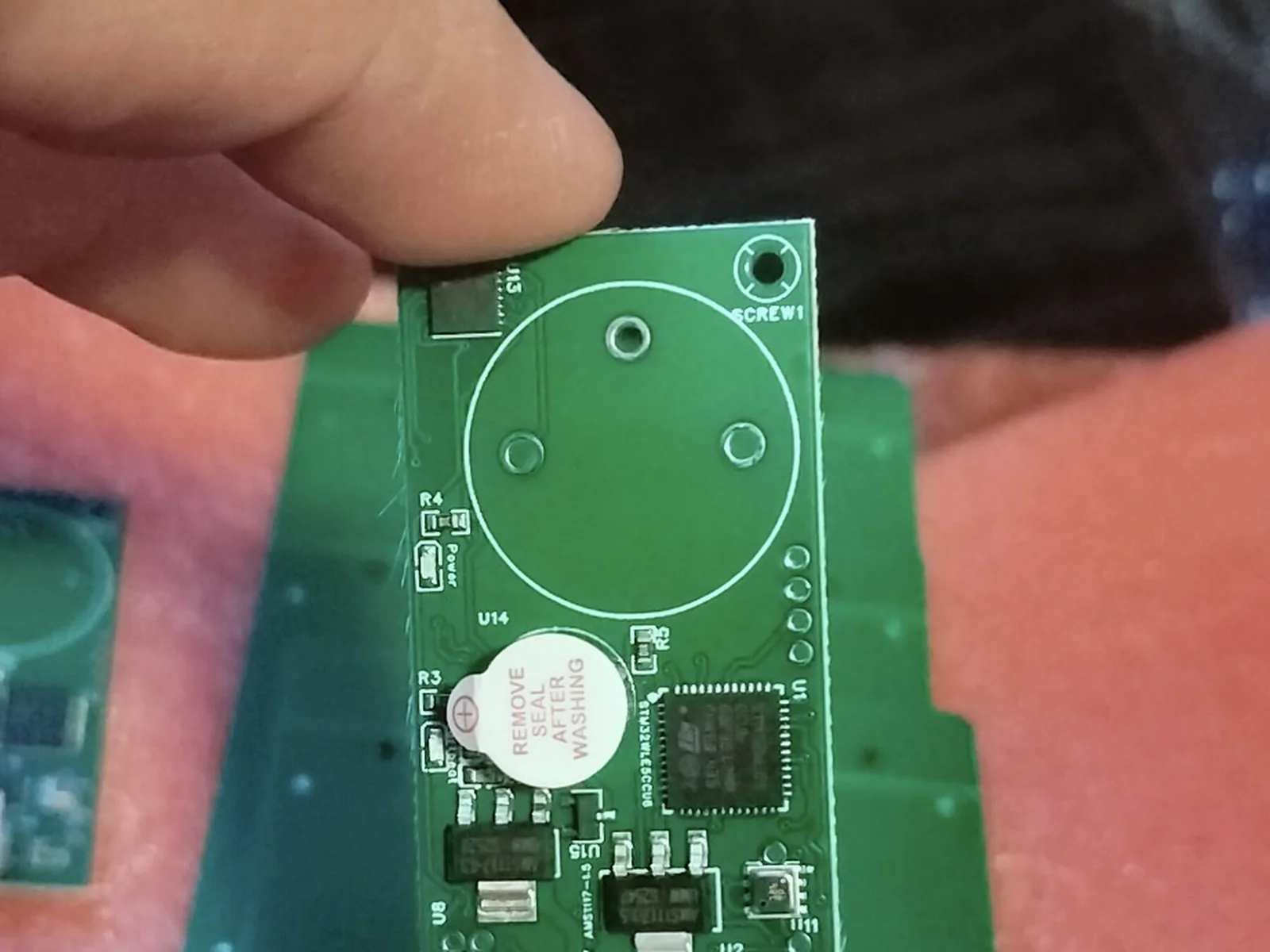
AeroHive Sentinel combines air sampling, selective biological sensing, embedded processing, and local decision support. I designed the electronics, ordered the first prototype board, and used the first bring-up failure to tighten the review process for the wider Sentinel research platform.
Iterations
The work did not happen in one jump.
- 01
Developed the scientific and operational problem statement for an NIH R03 pathway.
- 02
Separated the air-handling, sensing, power, and embedded-inference problems before committing to a board.
- 03
Captured the electronics design, laid out the PCB, reviewed the assembled-board model, and fabricated the first AeroHive prototype through JLCPCB.
- 04
First power-up exposed an incorrect chip-pin orientation that routed supply to ground and destroyed the board.
- 05
Turned the failure into a staged bring-up checklist covering package verification, rail checks, current limiting, and subsystem-by-subsystem power-up.
Result
Where the project landed
A fabricated AeroHive Sentinel prototype board, documented PCB-design work, and a structured research proposal. It is presented as a real prototype—not as a validated finished biological detector.
Lessons
What carried forward
- Grant writing is system design: every unsupported claim becomes an experiment that must be planned.
- A board can pass design-rule checks and still fail electrically if symbol, footprint, or pin-orientation assumptions are wrong.
- Current-limited staged bring-up should be part of the design process before the board arrives.
- A useful field sensor needs sampling, selectivity, calibration, interpretation, and maintenance—not only a sensing material.
Prototype evidence is shown openly; sensing performance, selectivity, and field accuracy remain research questions that require controlled validation.
The EasyEDA layout and blue research-board render are documented separately in the Sentinel Research PCB Platform case study.
Images & evidence
Work in context
Documentation status
This is a living case study. New photos, measurements, diagrams, source files, and exact outcomes can be added without changing the permanent project URL.
Continue exploring
Every catalog entry has a permanent page.
Use the archive to move between embedded systems, software, research, fabrication, networking, manufacturing tools, and field repairs.